Best Stand Mixers
The 2026 Guide · Stand Mixers for Home Bakers

A $120 mixer lists twice the watts of a $350 KitchenAid.

The VIVOHOME on this page lists a 660-watt motor. KitchenAid rates its Artisan at 325. If watts measured mixing power, the choice would be easy and the Artisan would have disappeared years ago. They don’t: a wattage figure is the electricity a motor draws, not the force that reaches the dough hook, and how much of it arrives depends on the motor and the gearing behind it — which is why KitchenAid compares its own models by power in the bowl rather than by watts. What actually separates a $70 mixer from a $640 one is bowl size, whether the head tilts or the bowl lifts, what the body is made of, and whether there is an attachment hub on the front. We compared published specifications, manufacturer data and current Amazon prices for every stand mixer we could find listed in the US.

By Ilane Tall6 picks · 30 mixers comparedResearch-based — no testing lab, no invented scores

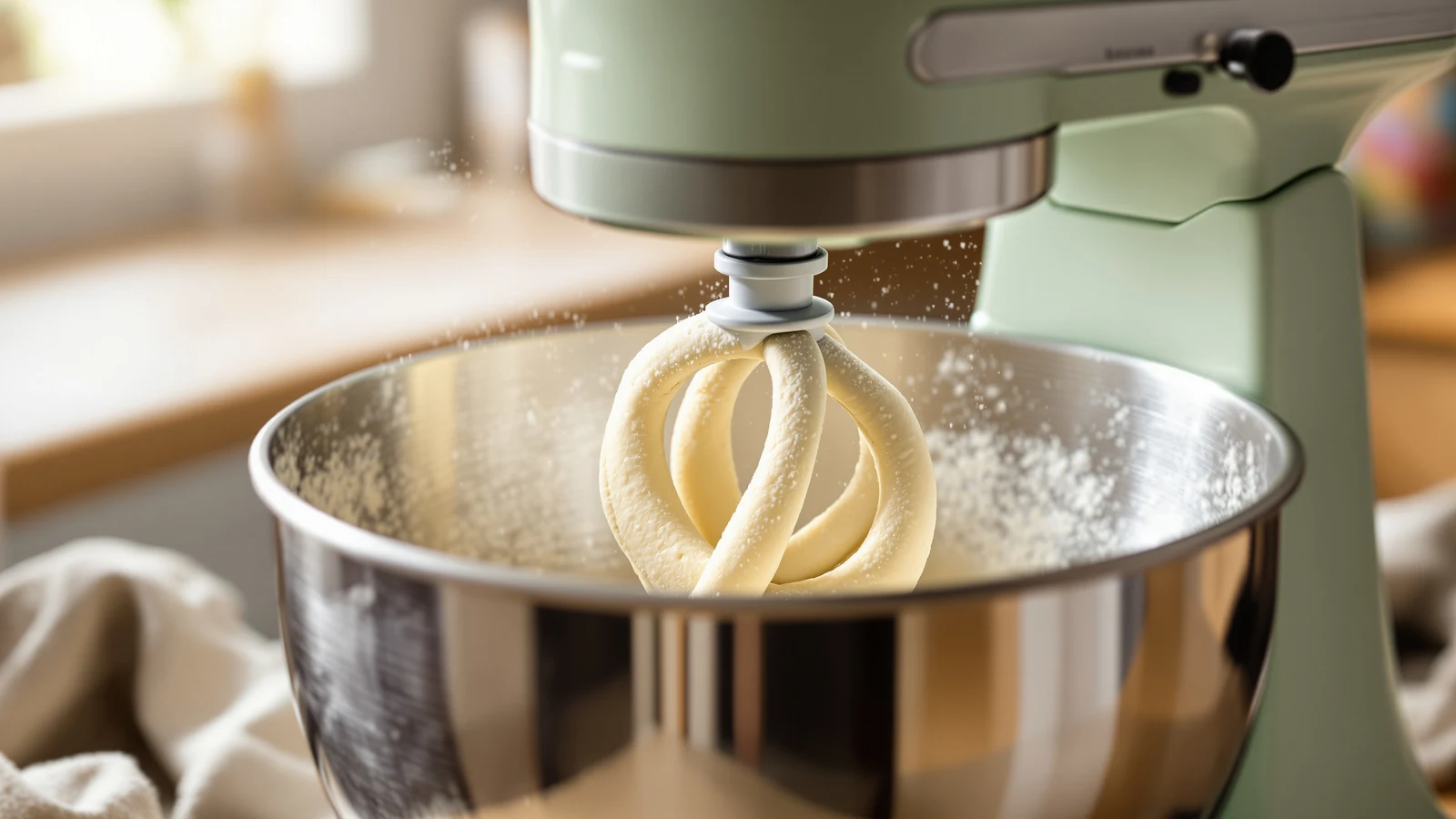
Cream tilt-head stand mixer kneading bread dough in a steel bowl on a floured wooden kitchen counter
The one to buy

KitchenAid Artisan 5-Quart Tilt-Head

The Artisan is the mixer the rest of this category is measured against, and in the right colour it costs closer to the mid-range than its reputation suggests. Five quarts covers most households’ baking — KitchenAid rates the bowl at nine dozen cookies per batch — the body is metal, the head tilts back so you can reach into the bowl, and the hub on the front takes KitchenAid’s own attachments, from a pasta roller to a meat grinder to a slicer. That last point is the one no cheaper mixer here can match at any wattage.

The honest caveat: the Artisan is a tilt-head, and a tilt-head is not the tool for big batches of stiff bread dough. KitchenAid says as much itself — it advertises its 5.5-quart bowl-lift as delivering twice the power in the bowl of this exact model. If you bake bread every week, or in double batches, look at the bowl-lift and the Bosch below. And choose the colour last: Amazon prices the identical KSM150PS differently by finish, sometimes by well over a hundred dollars.

5-quart steel bowl·10 speeds·Metal body, tilt-head·Pouring shield included
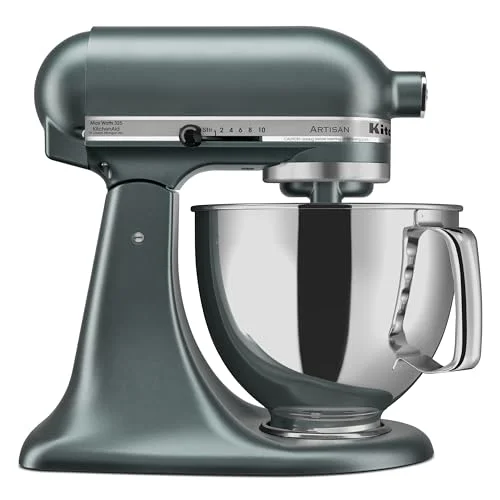
KitchenAid Artisan 5-quart tilt-head stand mixer KSM150PS
Price
$349.00
Check price on Amazon →

Prices change. We refresh them, but Amazon is the authority.

Before you buy

Four things decide this purchase. The wattage is not one of them.

Bowl size, in batches rather than quarts

Makers translate quarts into batches, and those translations are the useful numbers. Kitchen in the Box rates its 3.5-quart mini for one loaf of bread, two pizzas or twelve cupcakes. KitchenAid rates the 4.5-quart Classic at eight dozen cookies, the 5-quart Artisan at nine, and the 7-quart bowl-lift at thirteen dozen or more than 8.5 pounds of bread dough. Read the units carefully: some makers quote dough weight, some quote flour, some quote loaves, and those are not the same thing. Buy for the batch you make most weeks, not the holiday one.

Tilt-head or bowl-lift

On a tilt-head, the motor head hinges back and the bowl locks onto the base: easy to reach into, easy to scrape, shorter at rest — though it needs headroom to tilt. On a bowl-lift, the head is fixed and a lever raises the bowl up to the beater; KitchenAid describes a three-point locking bowl on its 5.5-quart model. That rigidity is why bowl-lifts are the bread baker’s choice. The costs are height, a tighter gap for adding ingredients, and price. Either way, measure the space under your wall cabinets before you order.

Watts measure what goes in, not what comes out

A motor’s wattage is the electricity it draws. What reaches the dough depends on the type of motor and the gearing between it and the beater. Bosch rates its 500-watt Universal Plus, through a belt-driven transmission, for up to fifteen pounds of whole-grain dough; KitchenAid compares its own mixers by horsepower in the bowl. Budget listings that lead with 660 or 900 watts are answering a question that matters less. Compare watts within one brand’s range if you must, never across brands.

The hub decides what else it can do

Under the cover on the front of a KitchenAid’s head is a power hub: fit an attachment and the motor drives a pasta roller, a meat grinder or a slicer — one Artisan listing ships with the Fresh Prep slicer/shredder in the box. Cuisinart’s SM-50 has a single power outlet for its own optional attachments. Most budget mixers list no hub at all; a few ship with a grinder or slicer made for that one machine. If you only ever mix, knead and whip, ignore this. If fresh pasta is a maybe, check it first.

Side by side

The six, compared

MixerBest forBowlDesignListed powerPriceGet it
KitchenAid Artisan Most kitchens 5 qt Tilt-head 325 W $349.00 Get it
Cuisinart SM-50 Full size for less 5.5 qt Tilt-back head 500 W $199.95 Get it
KitchenAid 7-Qt Bowl-Lift Weekly bread 7 qt Bowl-lift Not listed $639.95 Get it
Bosch Universal Plus Whole-grain batches 6.5 qt Bottom drive 500 W $499.00 Get it
VIVOHOME 6-Quart A first mixer 6 qt Tilt-head 660 W $119.99 Get it
Kitchen in the Box 3.5 QT One or two people 3.5 qt Compact 300 W $69.99 Get it
The six

Our picks, and who each one is for

01Best overall

KitchenAid Artisan 5-Quart Tilt-Head Stand Mixer

Best for most kitchens

5 quarts·Metal construction·10 speeds·Pouring shield

The default, for reasons that go beyond the badge. KitchenAid builds the Artisan in metal, specifies 59 touchpoints around the bowl — its way of describing how thoroughly the beater’s orbit covers it — and gives it ten speeds on a slide control, from a very slow stir to a fast whip. The five-quart stainless bowl has a handle and is dishwasher safe. The head locks down while mixing and tilts out of the way when you need to scrape the sides or add flour. Then there is the hub: no other mixer on this page has an attachment range anywhere near as deep.

If you want one mixer for cakes, cookies and the occasional loaf, and you might want pasta later, this is it.

KitchenAid Artisan tilt-head stand mixer
Price
$349.00
Check price →
02Best under $200

Cuisinart SM-50 5.5-Quart Stand Mixer

Best for a full-size mixer at a lower price

5.5 quarts·500 watts·12 speeds·Die-cast metal

On paper, Cuisinart gives you more than the Artisan for less: a larger 5.5-quart polished stainless bowl, a 500-watt motor, twelve speeds instead of ten, and die-cast metal construction, with a chef’s whisk, a dough hook, a flat paddle and a splash guard with a pour spout in the box. The head tilts back, and there is one power outlet for optional attachments. What it does not have is KitchenAid’s ecosystem — Cuisinart’s attachment range is much narrower — and, as with KitchenAid, some colours cost noticeably more than others for the same machine.

The one to buy if you want a full-size, metal-bodied mixer and the attachment hub is not the point.

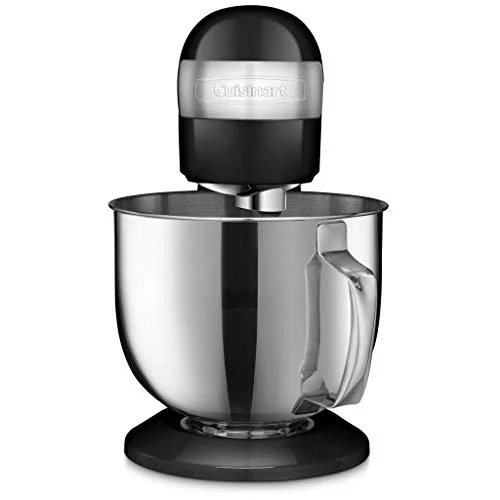
Cuisinart SM-50 5.5 quart stand mixer
Price
$199.95
Check price →
03Best for bread

KitchenAid 7-Quart Bowl-Lift Stand Mixer

Best if you bake bread every week

7 quarts·Bowl-lift·11 speeds, including ½·Double Flex Edge beater

This is where the bowl-lift earns its price. A lever raises the 7-quart bowl to a fixed head instead of the head tilting down to the bowl, and KitchenAid rates the capacity at more than 8.5 pounds of bread dough, or thirteen dozen cookies, per batch. It adds a half speed below the usual first, for folding blueberries or egg whites into a batter without overbeating, and ships with a Double Flex Edge beater plus four other accessories. The listing does not publish a wattage; the batch rating is the number to read instead. Two honest drawbacks: it is the most expensive mixer on this page, and bowl-lifts stand taller than tilt-heads — no height is given, so measure under your cabinets first.

Overkill for cupcakes. For a weekly double batch of sandwich bread, the right tool.

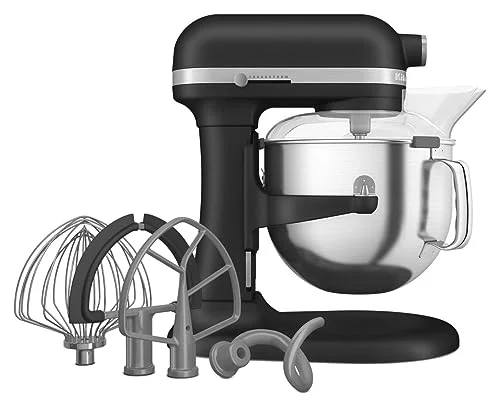
KitchenAid 7 quart bowl-lift stand mixer
Price
$639.95
Check price →
04Best for big batches

Bosch Universal Plus 6.5-Quart Stand Mixer

Best for large batches of whole-grain dough

6.5 quarts·500 watts·Belt-driven·Dough hook extender included

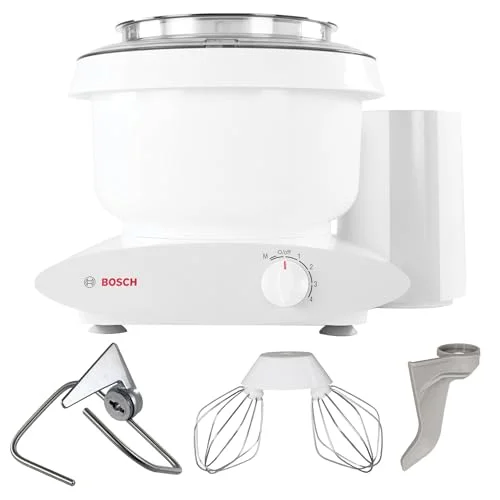
The Bosch looks nothing like the other five and works nothing like them. The motor sits underneath and drives the tools from below, through a belt-driven transmission that Bosch rates for up to fifteen pounds — about fourteen loaves — of whole-grain bread dough, or 34 dozen cookies in one batch. That is the largest batch rating in this guide by a distance. Because the drive comes from below, the top of the bowl stays open for adding ingredients, and the dual wire whips are rated for as little as one egg white. This bundle adds NutriMill’s dough hook extender. The trade-offs: the bowl is BPA-free plastic rather than steel, and nothing from the KitchenAid attachment world fits it.

If you mill your own flour or bake for a big family, this is the specialist. Everyone else will find it an odd machine.

Bosch Universal Plus stand mixer with dough hook extender
Price
$499.00
Check price →
05Best budget

VIVOHOME 6-Quart Tilt-Head Stand Mixer

Best for a first stand mixer

6 quarts·660 watts·10 speeds plus pulse·Planetary mixing

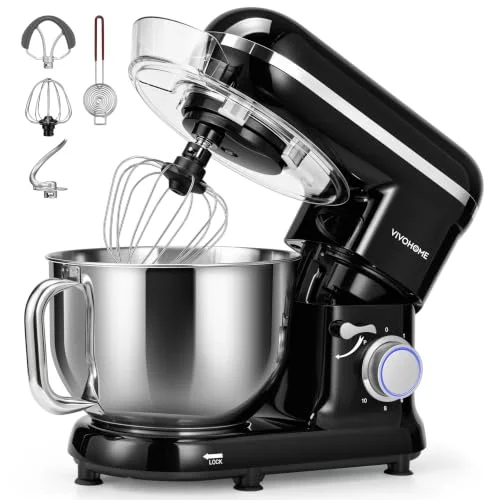
About a hundred and twenty dollars buys a 6-quart bowl, a 660-watt copper motor, ten speeds plus a pulse setting, and planetary mixing — the same orbiting-beater principle the expensive machines use. VIVOHOME rates the bowl at three loaves, or 2.2 pounds of flour, and pitches it at households of two to four. A whisk, a dough hook, a beater and an egg separator are included, and suction cups underneath hold it to the counter, which is how a light machine stays put where a heavy one relies on its own mass. The listing does not describe the housing as metal and shows no attachment hub: it mixes, kneads and whips, and that is all it will ever do.

A sensible way to find out how often you really bake. If the answer is every weekend, you will know what to upgrade to.

VIVOHOME 6 quart tilt-head stand mixer in black
Price
$119.99
Check price →
06Best small

Kitchen in the Box 3.5-Quart Stand Mixer

Best for one or two people and small kitchens

3.5 quarts·Under 5 lb·10 speeds·300 watts

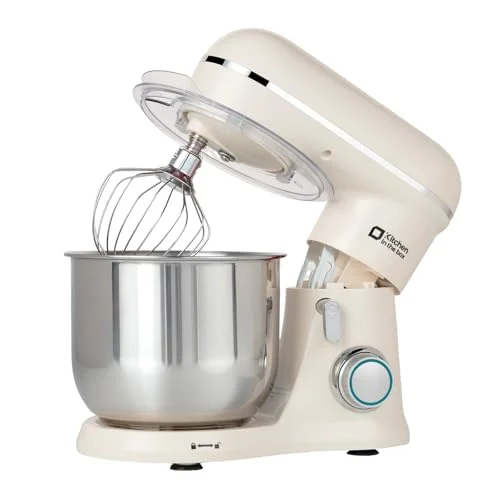
Seventy dollars and under five pounds, which changes how you live with a stand mixer: this one goes in a cupboard and comes out when needed, instead of claiming permanent counter space. The maker rates the 3.5-quart bowl for one loaf of bread, two pizzas or twelve cupcakes, and points out that the bowl is small enough to chill in the refrigerator with the ingredients still in it. Ten speeds, a 300-watt motor, planetary mixing, suction-cup feet and a dishwasher-safe bowl. Those batch numbers are the ceiling, not a starting point — if you regularly bake for more than two, you will outgrow it quickly.

The right size for a small kitchen and a small household. Anything bigger is cupboard space you will not get back.

Kitchen in the Box 3.5 quart compact stand mixer in white
Price
$69.99
Check price →
Our method

How we picked — and what we can’t tell you

What we did

Specs, prices and manufacturer data

We compared published specifications and current Amazon prices for sixty stand-mixer listings — about thirty distinct models once colour variants are folded together — then kept the mixers whose makers publish something checkable: a bowl capacity, a batch rating, a speed count, a motor rating, a head design. We treated wattage with suspicion, because it says little about what reaches the bowl, and weighted capacity, head design, construction and the attachment hub far above anything in the product copy. Where a model is sold in several colours at different prices, we link one finish; check the others before you buy.

What we didn’t

We don’t run a testing lab

We do not physically test these mixers, we do not own them, and we do not publish invented scores out of ten. We also have no verified rating data for this category, so this site publishes no ratings of any kind — we would rather show nothing than make something up. The question that matters most over the years — how a motor and its gears hold up after hundreds of batches of stiff dough — cannot be answered by anybody who has had a mixer for a fortnight. What we can do honestly is read every specification, compare them, and explain the mechanics behind them.

Go deeper

The guides behind the picks

FAQ

Common questions

Is a KitchenAid really worth three times a budget mixer?

Not for the wattage — the budget machines list more of it. What the premium buys is metal construction, a bowl and beater designed to work together, a choice of tilt-head or bowl-lift at several sizes, and above all the attachment hub, which turns the mixer into a motor for pasta rollers, grinders and slicers. It also buys a brand whose bowls, beaters and attachments are sold almost everywhere. If you bake a couple of times a month and only ever mix, a well-specified $120 mixer will do the job. If you bake every week, or want the mixer to do more than mix, the difference is real.

Tilt-head or bowl-lift: which should I get?

Tilt-head, unless you bake bread often or in big batches. A tilt-head hinges back, so the bowl is easy to reach, scrape and fill, and it is the shorter design at rest — though it needs headroom above it to tilt. A bowl-lift keeps the head fixed and raises the bowl to it with a lever, which holds the bowl more rigidly under heavy dough; KitchenAid claims its 5.5-quart bowl-lift puts twice the power into the bowl of its 5-quart tilt-head Artisan. The costs are height, less room to add ingredients mid-mix, and price. Measure the gap under your wall cabinets before choosing either.

Does a higher wattage mean a more powerful mixer?

Not across brands. Wattage is the electricity a motor draws, not the force delivered to the dough hook; what arrives at the bowl depends on the motor type and the gearing or belt between motor and beater. That is how a 500-watt, belt-driven Bosch can be rated for fifteen pounds of whole-grain dough while some budget mixers list 660 or 900 watts with much smaller batch ratings. KitchenAid itself compares its models by horsepower in the bowl. The more useful number is the batch rating — how much dough, how many loaves or how many dozen cookies the maker says the bowl handles.

What size bowl do I need?

Five quarts if you are unsure. Around 3.5 quarts suits one or two people — Kitchen in the Box rates its 3.5-quart mini for one loaf or twelve cupcakes. The 4.5 to 5.5-quart range is the household default: KitchenAid rates the 4.5-quart Classic at eight dozen cookies and the 5-quart Artisan at nine. Seven quarts and up is for bread bakers and big families; KitchenAid’s 7-quart bowl-lift is rated for more than 8.5 pounds of dough. Bigger is not automatically better: a very large bowl gives the beater less to work with on small jobs like a couple of egg whites.

Can a stand mixer knead bread dough?

Every mixer on this page comes with a dough hook and mentions bread. The real questions are how much dough and how often. Read the batch ratings, and read their units: VIVOHOME quotes 2.2 pounds of flour, KitchenAid quotes more than 8.5 pounds of dough for its 7-quart, Bosch quotes fifteen pounds of whole-grain dough, and Kitchen in the Box quotes one loaf. Flour weight and dough weight are not the same measure. Stiff, low-hydration and whole-grain doughs are the hardest work a home mixer does; for an occasional loaf any of these will knead it, and for several loaves every week a bowl-lift or the Bosch is the safer choice.

Do KitchenAid attachments fit other mixers?

Assume not. KitchenAid’s hub attachments are made for KitchenAid stand mixers, and the Classic’s listing states its compatibility with them in so many words. Cuisinart’s SM-50 has a power outlet of its own for Cuisinart’s optional attachments. Most budget mixers have no hub at all; a few, such as VIVOHOME’s 3-in-1 and slicer bundles, ship with a grinder, blender or slicer made for that one machine. If attachments are part of the plan, choose the mixer for its hub before anything else.

Why does the same KitchenAid cost different amounts in different colours?

Because on Amazon each colour is its own listing, priced separately, and the gap between finishes of the identical model can run past a hundred dollars. The KSM150PS Artisan is the same mixer in every colour — same motor, same 5-quart bowl, same ten speeds. Bundles muddy it further: some Artisan listings add a Flex Edge beater, a slicer attachment or an extended protection plan, which is fine if you want the extra and expensive if you do not. Decide on the model first, then check every finish before you pay.